
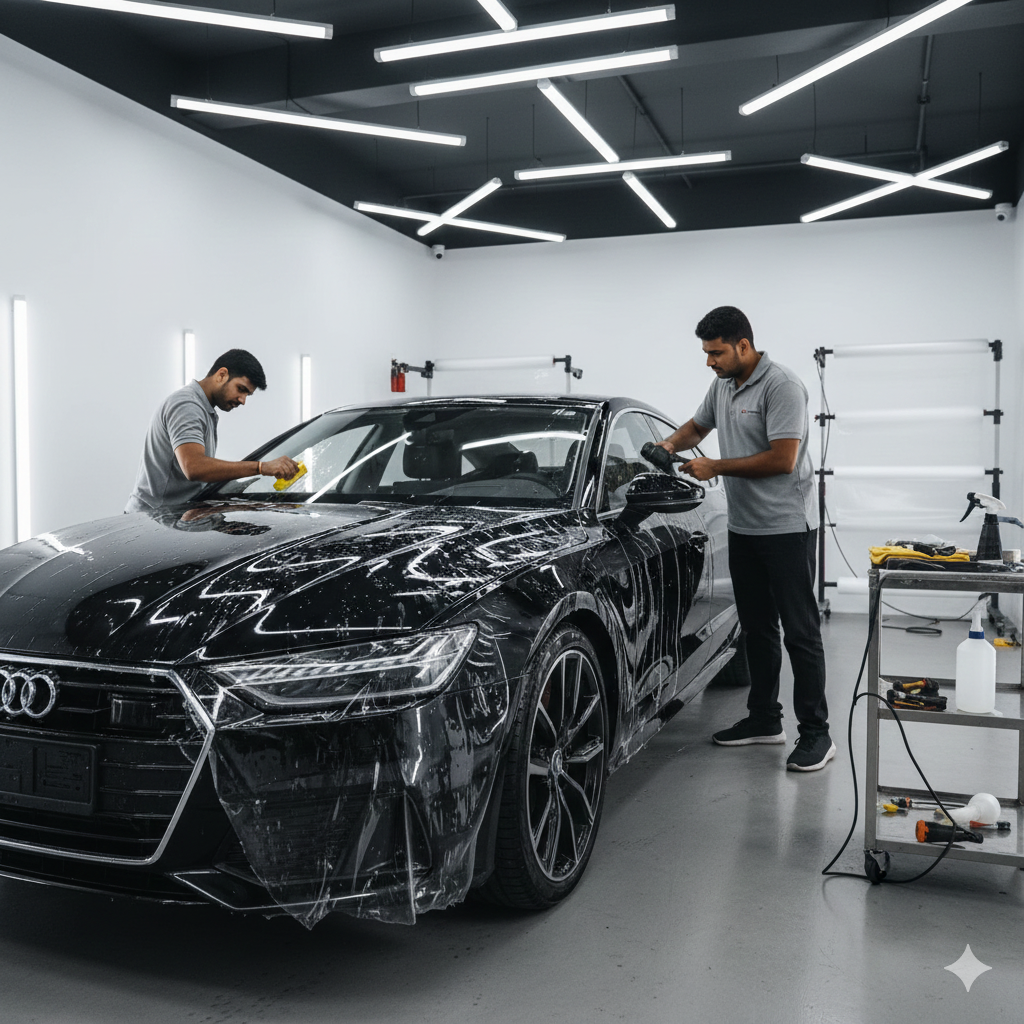
When purchasing a new car, you’ve likely encountered the immediate suggestion—from both the showroom dealer and aftermarket specialists—to opt for PPF Coating (Paint Protection Film). But what exactly is PPF? Is it a mandatory investment for your vehicle, or is it an expensive add-on you can safely skip? And perhaps the most crucial question: How much does it truly cost?
If you’re loaded with these doubts, you’re in the right place. We will fundamentally resolve your confusion by detailing the science of PPF, comparing it to other forms of paint protection, and giving you an honest look at the cost versus the long-term benefits.
Paint Protection Film (PPF), or Anti-stone Film, is a durable, transparent, thermoplastic sheet applied to the exterior painted surfaces of a vehicle.
PPF is primarily made from Thermoplastic Polyurethane (TPU), a high-performance polymer known for its exceptional flexibility, durability, and resistance to abrasion. This material is also the foundation of its unique protective capabilities
PPF works by creating a thick, resilient, multi-layered shield over your car’s clear coat, utilizing both physical and chemical resistance.
Key Protective Properties Imparted by PPF Coating
| Property | Mechanism and How it Protects | Feature Resulting from TPU Composition |
| Physical Impact Resistance | The thick, thermoplastic urethane (TPU) layer absorbs and disperses energy from flying debris (stone chips, gravel). | Prevents Chipping and Cracking of the underlying paint and clear coat. |
| Abrasion Resistance | Acts as a sacrificial layer, shielding the paint from light surface friction, rubbing, and minor scuffs. | Minimizes Swirl Marks and Scratches from washing and minor everyday contact. |
| Self-Healing | The elastomeric polymers in the topcoat restore the film’s smooth structure when exposed to mild heat (sunlight, warm water). | “Erases” Fine Scratches and swirl marks, maintaining a pristine finish. |
| UV Resistance | Contains UV Inhibitors that block harmful ultraviolet radiation from reaching the paint. | Prevents Paint Fade and Oxidation caused by sun exposure over time. |
| Chemical/Stain Resistance | Provides a non-porous barrier against corrosive environmental contaminants. | Protects Against Damage from acid rain, bird droppings, tree sap, and road tar. |
| Clarity and Aesthetics | Maintains high optical clarity and is virtually invisible once applied correctly. | Maintains Factory Finish (or enhances gloss) without altering the car’s color. |
| Durability | Chemically stable composition ensures long service life without peeling, cracking, or yellowing (on high-quality films). | Long-Term Protection lasting typically 5 to 10 years. |
Quality Variation by Material (The Core Difference)
| Material Type | Quality Tier | Key Characteristics | Longevity/Warranty |
| TPU (Thermoplastic Polyurethane) | Premium/Best | Highly flexible and durable. Superior self-healing properties. Excellent optical clarity. Highest resistance to yellowing and cracking. | ~7 to 10+ years |
| TPH (Thermoplastic Hybrid) | Mid-Range/Moderate | A blend, often using plasticizers to make PVC more flexible. Lacks self-healing capability. Better than PVC but may lose clarity faster than TPU. | ~3 to 5 years |
| PVC (Polyvinyl Chloride) | Lowest/Budget | The oldest, most rigid material. Low flexibility (hard to fit curves). No self-healing. Prone to cracking and yellowing over time, especially in high heat/sunlight. | ~2 to 3 years |
Quality Variation by Specifications and Features
| Feature | High Quality (Premium Brands) | Low Quality (Budget Brands) |
| Thickness | ~190 to 200+ microns. | ~150 to 180 microns. |
| Self-Healing Speed | Instant or near-instant self-healing with minimal heat application. | Delayed self-healing, requiring high heat (like a heat gun) to activate, or no self-healing (in TPH/PVC). |
| Clarity | High Optical Clarity. Virtually invisible, does not dull the paint. | May have “orange peel” texture, slightly dulling the paint’s gloss. |
| Top Coat (Hydrophobicity) | Often includes a ceramic-infused top coat for advanced water and dirt repellency. | Basic top coat with lower resistance to staining and water spots. |
| Warranty | Typically 7 to 10 years (or even lifetime) against peeling, bubbling, and yellowing. | Often 5 years or less, with exclusions for yellowing or cracking. |
Top Brands
Premium brands like XPEL, Llumar, 3M (Scotchgard Pro Series), Saint-Gobain PPF Sapphire & Hydro, ProShield PPF, DETAILMAX are recognized globally and in the Indian market for using high-grade TPU materials and backing their films with long warranties. Choosing a reputable brand is as important as choosing the material type.
Average cost of PPF Coating in India (2025-26)
The cost of Paint Protection Film (PPF) installation in India is highly variable and depends on a combination of the film’s quality, the size of the vehicle, and the installer’s expertise.
Generally, you will find a wide range spanning from ₹40,000 up to ₹2,50,000 or more for a full vehicle wrap, depending on your choice.
Here is a breakdown of the typical costs based on quality and coverage:
| Quality Tier | Estimated Price Range (Full Car) | Typical Film Type & Warranty | Target Customer |
| Budget/Lower Mid-Range | ₹40,000 – ₹75,000 | TPH or basic TPU. 3-5 Year Warranty (may have exclusions for yellowing). | Standard Hatchbacks, older Sedans, budget-conscious owners prioritizing basic protection over long-term clarity. |
| Mid-Range/High-Quality | ₹85,000 – ₹1,20,000 | Reputable TPU brands (like Garware, 3M, or specific domestic brands). 5-7 Year Warranty. | Most Sedans and Hatchbacks, smaller SUVs. Offers reliable self-healing and good clarity. |
| Premium/Luxury | ₹1,25,000 – ₹2,50,000+ | Global, industry-leading brands (like XPEL, Stek, Llumar). 8-10 Year or Lifetime Warranty. | Luxury cars, performance vehicles, high-end SUVs, or owners who prioritize absolute clarity and maximum resale value. |
⚠️ Potential Risks and Damage to Car Paint from PPF
| Risk Category | Potential Damage to Paint | Primary Cause | Mitigation Strategy (What to tell the buyer) |
| I. Film Degradation (Long-Term) | |||
| Yellowing/Discoloration | Makes the paint underneath appear dull or yellowish, especially on white or light-colored cars. | Low-Quality Film (PVC/TPH): Films lacking adequate UV inhibitors break down due to sun exposure. | Invest in Premium TPU: Ensure the film is branded TPU with a minimum 8-10 year anti-yellowing warranty. |
| Cracking/Peeling | The film lifts at the edges (often near bumpers/lights), exposing the edge of the paint to damage. | Poor adhesion due to improper surface preparation or low-grade adhesive. | Choose a certified installer who meticulously cleans and decontaminates the surface before application. |
| II. Installation and Aesthetic Flaws | |||
| Orange Peel/Distortion | The film’s surface texture is visible, creating a distorted reflection that reduces the paint’s gloss. | Low-Quality Film: Inherently poor quality or uneven film thickness. Amateur Installation: Improper stretching or dirty water trapped during fitting. | Demand a Clean Environment: Ensure the installation is done in a dust-free, temperature-controlled studio. |
| Adhesive Residue | Sticky, visible glue patches are left on the clear coat after the film is removed. | Low-Quality Adhesive or Film Left On Too Long: The adhesive bonds aggressively to the paint over many years. | Adhere to the Warranty Period: Remove and replace the film within the manufacturer’s recommended lifespan. |
| III. Removal Damage (The Biggest Fear) | |||
| Clear Coat/Paint Peeling | The top layer of the clear coat or base color lifts off with the film. | Repainted Panels: Paint that is not factory-applied or improperly cured does not have sufficient bond strength. Improper Removal: Removing the film cold or too fast/aggressively. | Always Hire a Professional: They use controlled heat (steam/heat guns) and proper angle (45-degree angle) to soften the adhesive for a clean lift. |
| Scratches/Scuff Marks | Damage caused during the removal process. | Technician uses sharp tools (metal blades) to lift edges or scrape off stubborn, brittle pieces of degraded film. | Confirm the installer uses specialized plastic/vinyl tools and paint-safe adhesive removers. |