
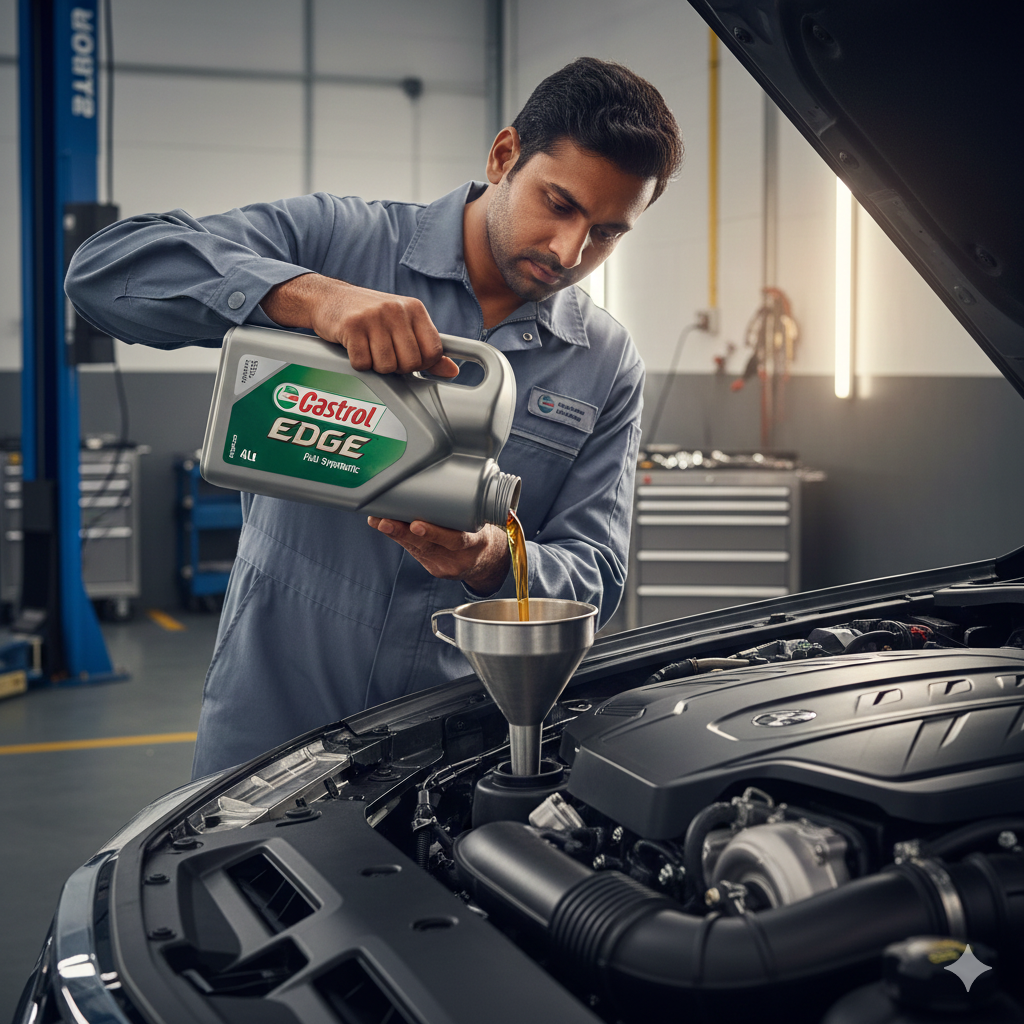
Every vehicle owner—whether managing a personal two-wheeler, a commercial fleet, or heavy construction equipment—faces a persistent question: Should I choose Synthetic or Conventional Engine Oil? And more importantly, how will that decision truly impact engine performance and overall lifespan?”
“This common confusion is valid across all vehicle categories. To resolve this doubt fundamentally, we will first explore the sole purpose of engine oil. Then, we will detail the structural differences between these two major oil categories and their specific impact on your engine’s longevity and efficiency.
The Five Essential Roles of Engine Oil:
| Role of Engine Oil | Mechanism and Function | Consequence of Failure (No Oil) |
| 1. Lubrication | Forms a protective, low-friction film between all moving metal parts (pistons, bearings, camshafts) to prevent direct contact. | Rapid, catastrophic wear and tear; parts seize due to extreme friction. |
| 2. Cooling | Absorbs heat generated by friction and combustion from the hottest internal surfaces (e.g., piston crowns) and transfers it to the sump or oil cooler for dissipation. | Localized overheating (hot spots) leading to metal fatigue and component warping. |
| 3. Cleaning & Detergency | Detergent additives clean deposits off surfaces; dispersant additives hold soot, carbon, and sludge in suspension. | Sludge and varnish buildup; oil passages clog, leading to oil starvation. |
| 4. Sealing | Creates a thin film between the piston rings and cylinder walls, ensuring maximum pressure and efficiency within the combustion chamber. | Loss of compression, resulting in reduced power, poor performance, and increased blow-by gases. |
| 5. Corrosion Protection | Alkaline additives neutralize combustion acids; the oil coats metal surfaces, protecting them from rust and oxidation caused by moisture and air. | Internal components rust, especially when the engine is idle; acid buildup damages bearings and metal surfaces. |
Key Differences: Synthetic vs. Conventional Engine Oil
| Feature | Conventional (Mineral) Engine Oil | Synthetic Engine Oil |
| Base Stock Source | Refined directly from crude petroleum oil through standard distillation processes. | Chemically engineered in a lab using highly purified base oils (e.g., Group III, IV, or V). |
| Molecular Structure | Irregular size and shape (like stones/rocks). Contains many impurities (sulfur, wax). | Uniform size, shape, and weight (like marbles). Almost pure and free of impurities. |
| Viscosity (Flow) in Cold | Thicker. Becomes highly viscous (sludgy) at low temperatures, making cold starts difficult and slow. | Thinner. Excellent cold flow properties (low viscosity). Reaches critical engine parts faster. |
| Viscosity in Heat | Thinner. Breaks down (thins out) faster under extreme heat and shearing forces. | More Stable. Maintains optimal viscosity (thickness) even at very high operating temperatures. |
| Thermal Stability | Lower. Oxidizes and breaks down faster, leading to quicker formation of sludge and varnish deposits. | Higher. Resists thermal breakdown and oxidation significantly better, extending oil change intervals. |
| Engine Protection | Good protection under normal operating conditions; wears down faster under stress. | Superior. Provides a more durable film layer, offering better wear protection under heavy load and high heat. |
| Oil Change Interval | Shorter (typically 3,000 to 5,000 miles or 5,000 to 8,000 km). | Longer (typically 7,500 to 15,000 miles or 12,000 to 25,000 km, depending on the manufacturer). |
| Cost | Lower per quart/liter. | Higher per quart/liter. |
The fundamental difference is that the uniform molecular structure of synthetic oil allows it to flow better when cold and resist thinning when hot, giving it a much wider performance envelope and better long-term protection compared to conventional oil.
Average Price Range Per Litre of Engine oils in India (2025-26)
| Oil Type | Estimated Average Price Range (Per Litre) | Upfront Cost Comparison |
| Conventional (Mineral) Oil | ₹300 – ₹600 | Lower |
| Semi-Synthetic Oil | ₹450 – ₹800 | Moderate |
| Full Synthetic Oil | ₹700 – ₹1,200+ | Higher |
🚗 Choosing the Right Engine Oil: Vehicle
| Vehicle/Condition Category | Type of Oil Recommended | Primary Rationale for Choice |
| New/Modern Vehicles | Full Synthetic (Required by most manufacturers) | Provides the best protection for modern, precision-built engines that run hotter and have tighter tolerances, especially those with turbochargers. |
| High-Performance Vehicles | Full Synthetic | Superior stability and heat resistance under extreme high-RPM, high-stress, and high-temperature driving conditions (e.g., sports cars, performance motorcycles >200 CC). |
| Standard Commuter Cars/Bikes (Low Stress) | Conventional or Semi-Synthetic | Adequate protection for low-stress, light driving (short commutes, no extreme weather). Cost-effective choice for users who stick to short drain intervals (3,000–5,000 km). |
| High Mileage Vehicles (Over 1,00,000 km) | Conventional or High-Mileage Specific Blend | Older engines may have worn seals. High-Mileage conventional oils often contain seal conditioners to prevent leaks. Switching to synthetic may clean residue and temporarily expose old leaks. |
| Extreme Driving Conditions | Full Synthetic | Essential for resisting breakdown caused by extreme heat (Indian summers, desert driving) or providing fast, reliable flow during extreme cold starts. |
| Commercial/Heavy Equipment | Full Synthetic or Heavy-Duty Synthetic Blend | Necessary for maximum protection against high load, constant stress, and extended idling hours typical of commercial vehicles and excavators. |
| The Budget-Conscious Driver | Conventional (With timely changes) | Best for minimizing upfront maintenance cost. Requires strict adherence to the manufacturer’s shorter oil change schedule. |
*Always check your owner’s manual first. While synthetic oil generally offers superior protection and longer intervals, using the specific viscosity grade (e.g., 5W-30) and API/ACEA specifications recommended by the manufacturer is the most important factor for maintaining your warranty and engine health.